Navigation Menu+

Healing Poetry

Whoever you are, no matter how lonely,

the world offers itself to your imagination,

calls to you like the wild geese, harsh and exciting

over and over announcing

your place in the family of things.

——from The Wild Geese by Mary Oliver

There are a large number of poems that could be offered as potentially healing. I’m offering here a handful that I’ve come across, and written about briefly, because they seem to me to resonate especially well with the process of healing, and because any one of them seems like it could be a springboard—a trampoline?—to one’s own writing.

I. Poems that conjure a healing place

Last Night As I Lay Sleeping by Antonio Machado

The Peace of Wild Things by Wendell Berry

The Lake Isle of Innisfree by WB Yeats

Island of the Raped Women by Frances Driscoll

Keeping Quiet by Pablo Neruda

What I Want by Alicia Ostriker

II. Poems about a quest

The Journey by Mary Oliver

Diving into the Wreck by Adrienne Rich

III. Poems that might offer company during a difficult time

The Guest House by Rumi

A Ritual to Read to Each Other by William Stafford

Satellite Call by Sara Bareilles

The Armful by Robert Frost

The Spell by Marie Howe

Talking to Grief by Denise Levertov

Sweetness by Stephen Dunn

My Dead Friends by Marie Howe  

III. Poems for looking at the world in new ways

The Wild Geese by Mary Oliver

Thirteen Ways of Looking at a Blackbird by Wallace Stevens

Eighteen Ways of Looking at Cancer by a group of women in a writing workshop

Report from a Far Place by William Stafford

who knows if the moon’s a by e.e. cummings

The Snowman by Wallace Stevens

Notes in Bathrobe Pockets by Raymond Carver

A New Path to the Waterfall, a collection by Raymond Carver and Tess Gallagher

The Summer Day by Mary Oliver

IV. Poems about the process of reading

Introduction to Poetry by Billy Collins  

V. Poems for considering purpose

Every Craftsman by Rumi.


Like a Desert Flower

Posted by on September 14, 2011 in Blog, Healing Poetry

Like a Desert Flower

  Because this month I am featuring Sakeena Yacoobi’s work at the Afghan Institute for Learning, I went looking for a poem out of Afghanistan. I was delighted to find this one, “Like a Desert Flower,” by Parween Faiz Zadah Malaal, a former journalist and popular woman poet, who lives and writes in the Pashto region of Afghanistan. Like a desert flower waiting for rain, like a river-bank thirsting for the touch of pitchers, like the dawn longing for light; and like a house, like a house in ruins for want of a woman – the exhausted ones of our times need a moment to breathe, need a moment to sleep, in the arms of peace, in the arms of peace. I read this poem as a plea. A poet speaking for the people around her – the exhausted ones of our times. In Afghanistan, but perhaps not only in Afghanistan. All the exhausted ones of our times who live, for whatever reason, without peace. And who need it, who wait for it. Like that parched riverbank waiting for water. Or like that house waiting for a woman to restore it. When I become aware of some of the exhausted ones of our times, even as simply as by thinking of them, or reading a new poem, it places my own intermittent exhaustion (more common now that school has begun again) into a larger perspective. Something about this seems important. It doesn’t necessarily dwarf my own exhaustion – though it could. It’s more like it connects it to something larger than me. I also feel a connection between this poem and the Machado poem, Last Night As I Was Sleeping. His poem contains some of the water that this poem longs for. And it occurs to me how difficult it must be to connect with any kind of aqueduct of water inside when one lives in the absence of peace. There are so many different ways to become parched.  And I’m so grateful for water – in all its forms. Some years ago now, I saw the poet and peace activist, Daniel Berrigan, speak. He kept saying, over and over, that peace is not a quick fix. It takes time. And I’m thinking this morning how the work of Sakeena Yacoobi is not about the quick fix but is about a deep and long-term investment in her country. Like a woman coming upon a house in ruins and deciding to begin the long patient work of doing something about it? Like a woman bringing water to her people? See also: Last Night As I Was Sleeping Replenish at Here We Were [The literal translation of “Like a Desert Flower” was made by Dawood Azami and the final translated version of the poem is by The Poetry Translation Workshop.] [Photo of a house in ruins in Herat is from The Telegraph via Associated...

read more
The Peace of Wild Things by Wendell Berry

Posted by on August 16, 2011 in Blog, Healing Places, Healing Poetry

The Peace of Wild Things by Wendell Berry

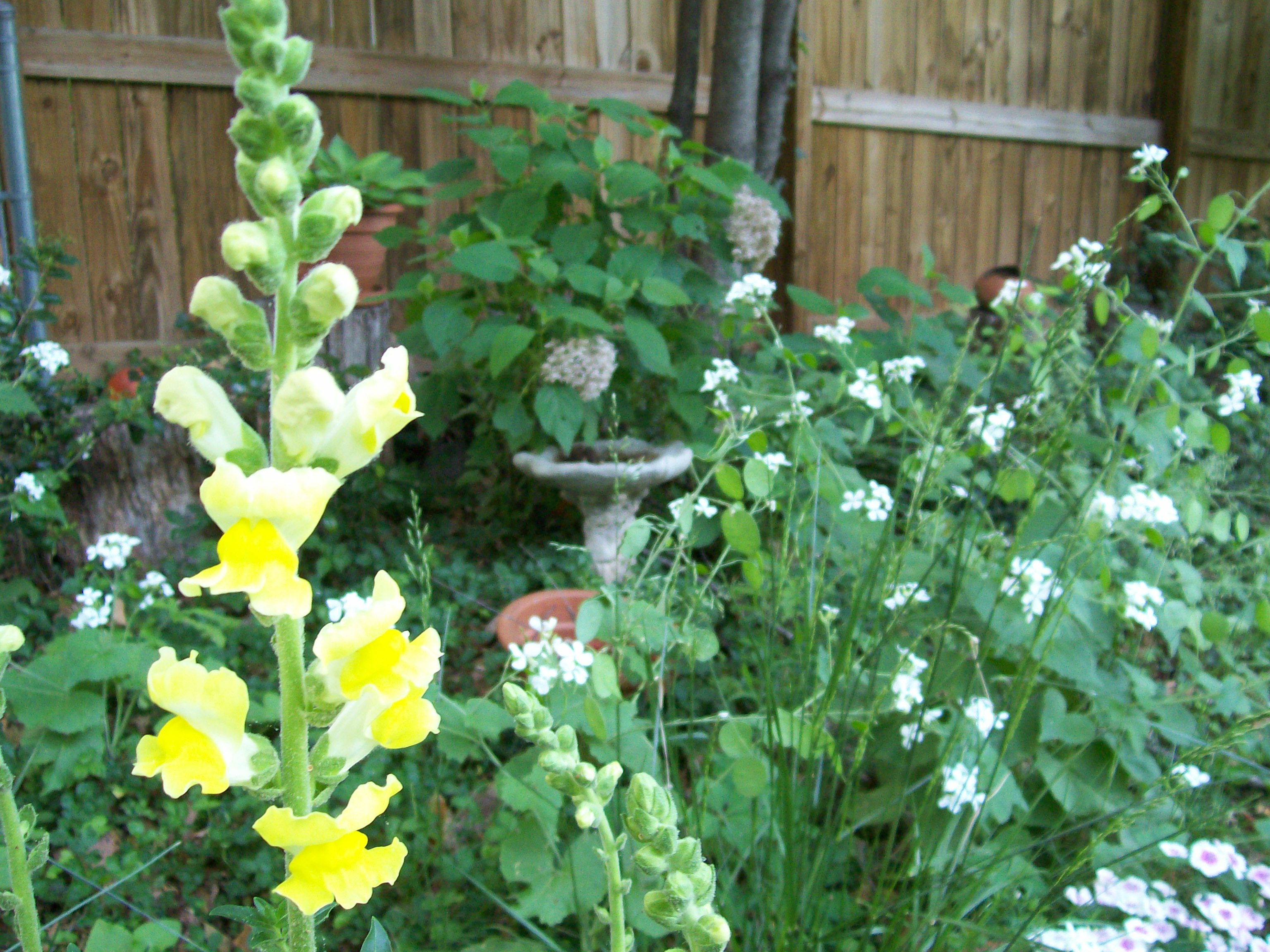
This is a poem for the middle of the night.  Here are the first six lines: When despair for the world grows in me and I wake in the night at the least sound in fear of what my life and my children’s lives may be, I go and lie down where the wood drake rests in his beauty on the water, and the great heron feeds. I come into the peace of wild things His words make me want to respond in kind.  To echo and borrow his rhythms: When despair for my life and the life of those whom I love grows in me and when I wake in the night and the fear is there like an old visitor, I go out to the kitchen and I make, again, a mug of hot cocoa, and I remember, if only for a moment, the breezeway in my grandmother’s house, the coolness against my bare feet, the way it led out to the patio and the small table there, the fence around the yard, and the flowers against the fence, hollyhocks and four o’clocks and lilac.  I feel how that place is still present because I can remember it and with that I come into the peace of my grandmother’s garden. See also: The Peace of Wild Things One Year of Writing and Healing, Chapter 1, Draft: Creating a Healing...

read more

Collecting and Responding to Poetry with Naomi Shihab Nye

Posted by on August 9, 2011 in Blog, Healing Poetry

Collecting and Responding to Poetry with Naomi Shihab Nye

A video arrived in my email box a couple of weeks ago, courtesy of The Academy of American Poets:   One excerpt in particular strikes me: I can never imagine how someone would fall in love with poetry and stop reading poems. But I think that people often talk themselves out of a bit of responding, which I also think is as important as collecting. We collect poems that encourage us to think in a way we need to think, or look at the world. But then we also allow ourselves—whatever our circumstances, or whatever our past history with writing—to write a little bit. I love that. The importance of collecting. But then to take it the next step. To write a little. To allow ourselves to write a little. Whatever our circumstances. I think something happens when we write in response to a poem—at least I’ve noticed this in myself. For one thing, I read the poem more carefully. I begin to hear the words and rhythms of it inside my head. The poem becomes more a part of me. I think there are a number of ways that we get “talked out” of responding to poetry. Sometimes we’ve had bad experiences with this in the past (and mostly with teachers, I’m afraid). Sometimes we think the experts own it—or that we could never know enough to respond. But we do know enough. My high school students, for instance, know enough. I know enough. We all do. At the very least, we each contain a storehouse of experiences and perceptions (we’re the expert on those) and we know enough to begin to make connections from the poem to this storehouse. Or we know enough to begin to make connections to other poems—or to books or movies or to a fragment of overheard conversation. We know enough to ask questions. To wonder about a poem. To speculate. I wonder what she was thinking when she wrote this. I wonder what she was feeling. I wonder who she had in mind as she was writing.  I wonder why I chose to collect this poem. I think something powerful can happen when we begin to collect and respond to poetry. When we begin to keep notebooks—or folders with scraps of paper. When we begin to intercalate our own words between and among the words of the poets. And then when we begin to share these. See also: A Secret About What A Poem Can Do to Us.  A piece about Michelle Bloom’s song, Last Night As I Was Sleeping, which shows what can be created out of a response to a poem. The Academy of American...

read more

A Secret About What a Poem Can Do to Us

Posted by on August 2, 2011 in Blog, Healing Poetry

A Secret About What a Poem Can Do to Us

I am returning to Antonio Machado’s poem, “Last Night As I Was Sleeping,” because I found yet another interpretation of the poem. In this case, not a different translation but a kind of collaboration with the poem to create something new. Michelle Bloom, a singer songwriter, has taken the poem and transformed it into a song. She’s used Robert Bly’s translation, but then twice, between stanzas, she’s inserted a chorus that she herself has written. She introduces her song this way: Inspired by the idea of making a moment, a “We” out of the quiet, internal act of reading a poem, this song seemed to come out of a dusty road in the Spanish countryside that Machado walked with the children he taught in a one-room schoolhouse. In the chorus I imagined Machado or The Poet, Universal, to suddenly interrupt the poem and turn toward the reader, eager to tell us a secret about what a poem can do to us, how it becomes not words on a page, but a living moment, embodied. I love this idea of an imagined interruption.  She imagines Machado or a Poet interrupting.  At the same time, it’s she herself interrupting and offering us something new. Here is the song: Lyrics and audio How lovely is that.  She’s taken the “quiet, internal act of reading a poem” and used this to add another layer to the poem.  That secret hinted at—what a poem can do—if we begin to sing it ourselves, and feel it. [photo credit from Michelle Bloom’s site, All Things Bloom] See also: Last Night As I Was...

read more

Last Night As I Lay Sleeping

Posted by on July 26, 2011 in Blog, Healing Places, Healing Poetry

Last Night As I Lay Sleeping

Twice recently I have come across this haunting and joyous poem by the Spanish poet, Antonio Machado. In the translation by Robert Bly it begins: Last night as I was sleeping, I dreamt – a marvelous error! – that a spring was breaking out in my heart. I said: Along which secret aqueduct, Oh water, are you coming to me . . . Looking around a little, I’ve seen some differences in the translation–especially in the second line. The original Spanish word translated as error is ilusion and can also be translated as vision.  I dreamt – a marvelous vision! – a blessed vision! – that a spring was breaking out in my heart. Either way – so many possibilities here. I love the idea of the water inside. It reminds me of a retreat center I visited once. The place was a house with a central courtyard and in the courtyard was a garden with a pond. I’m not a good meditator. But I tried a couple of meditation sessions there and when I did, and sometimes in the weeks and months after, I found myself imagining having that kind of courtyard inside my own self, with a pond. In Machado’s poem I like the idea that the water is moving. A spring. A secret aqueduct. Here is a lovely video rendition of the poem done by Four Seasons Productions, part of their Moving Poetry series which you can learn more about here. (If you have trouble playing the video, let it buffer first. Or, you can watch directly at YouTube here.) [The photo at the top of this post is grabbed from the...

read more