Navigation Menu+

Healing Places

What I Want by Alicia Ostriker

Posted by on January 11, 2015 in Blog, Healing Places, Healing Poetry

What I Want by Alicia Ostriker

This is a poem about slowing down and it seems like it might be just right for January, for the quiet space that can open up after the flurry of December. And about what can happen in that quiet. It follows nicely on Pablo Neruda’s poem, “Keeping Quiet,” and seems to spring from that same place. It begins: Yes, that’s what I want right now, Just that sensation Of my mind’s gradual Deceleration, as if I Took my foot off the gas And the Buick rolled to a stop. I can feel that—the quiet after the engine ceases its noise. And I love in this poem what she later suggests can emerge out of the quiet: Let’s try to listen to the announcements Of the inner mind And its committee of guides. They require silence, They demand respect, like teachers In a rowdy classroom—the kids Are in the cloakroom throwing galoshes But the teacher wants to introduce A visitor, a foreign child who waits With downcast eyes, lashes like brown feathers On his flushed silk cheeks. What does the inner mind have on its mind? Ah, the inner mind could emerge—but it might be shy at first—and it might need to wait for the kids to quit throwing their galoshes—for them to look up and realize this visitor might have something interesting—and even important—to say. The full poem can be found at Poetry Foundation. (It spreads over two pages so you need to navigate to the second page to see the full poem.) The photo of a gray cheeked thrush can be found at Audubon. The bird is described on this site in this way: “All the brown-backed thrushes can be shy and hard to see, but the Gray-cheek is perhaps the most elusive. During migration it hides in dense woods, slipping away when a birder approaches. On its far northern nesting grounds it may be more easily seen, especially in late evening, when it sings from treetops.”...

read more
Keeping Quiet by Pablo Neruda

Posted by on November 16, 2014 in Blog, Healing Places, Healing Poetry

Keeping Quiet by Pablo Neruda

I am sharing this poem, “Keeping Quiet,” with my sophomores this week as a writing catalyst. I like the way it has the potential to open up a pool of quiet in the middle of things. It begins: Now we will count to twelve and we will all keep still. Not instructions for counting to ten—that common advice for dealing with rising anger before reacting. No, this is longer—just a bit longer—stretching the silence out two beats longer. Now we will count to twelve. The opening reminds of something a teacher might say—a pre-school teacher? Or perhaps something a parent might say to a child before some kind of game. I think that’s what makes the line evocative—as if it holds the echo of something we’ve heard before. Now we will count to twelve and we will all keep still. The poem continues: For once on the face of the earth, let’s not speak in any language; let’s stop for one second, and not move our arms so much. No language. No large gestures. What then? Fisherman in the cold sea would not harm whales and the man gathering salt would look at his hurt hands. A pause for not-harming? A pause for looking at our own hands and seeing why they might hurt? A pause to simply look at what we’re doing and ask why we’re doing it? And to ask whether in fact it makes sense? What I want should not be confused with total inactivity. We would not be doing nothing We would be doing something. It’s a bit like meditation what he’s suggesting. Or perhaps writing. Not doing nothing. Doing something. Doing something different. And then, he tells us, this might become possible: perhaps a huge silence might interrupt this sadness of never understanding ourselves Who would not want this? The poem ends: Now I’ll count up to twelve and you keep quiet and I will go. Do you feel it? A sense of a vast space opening up. The poet has left—and we are here—in the quiet. The full text of the poem is here. The poem is from Extravagaria and is translated by Alistair Reed A short video of the poem being recited is here. The photo is from the...

read more

What to do with the salt of suffering?

Posted by on October 15, 2014 in Blog, Healing Grief, Healing Places, Healing Poetry, Writing and Healing Prompts

What to do with the salt of suffering?

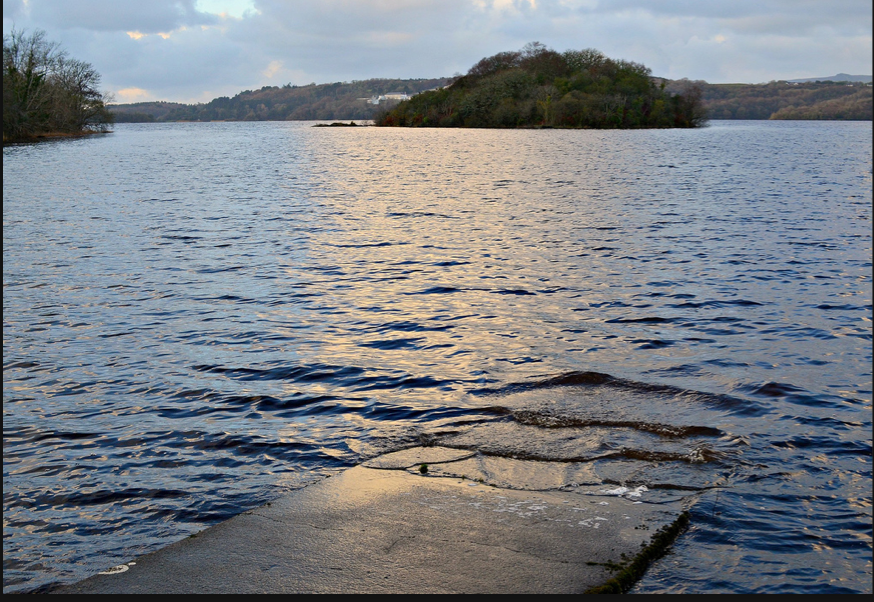
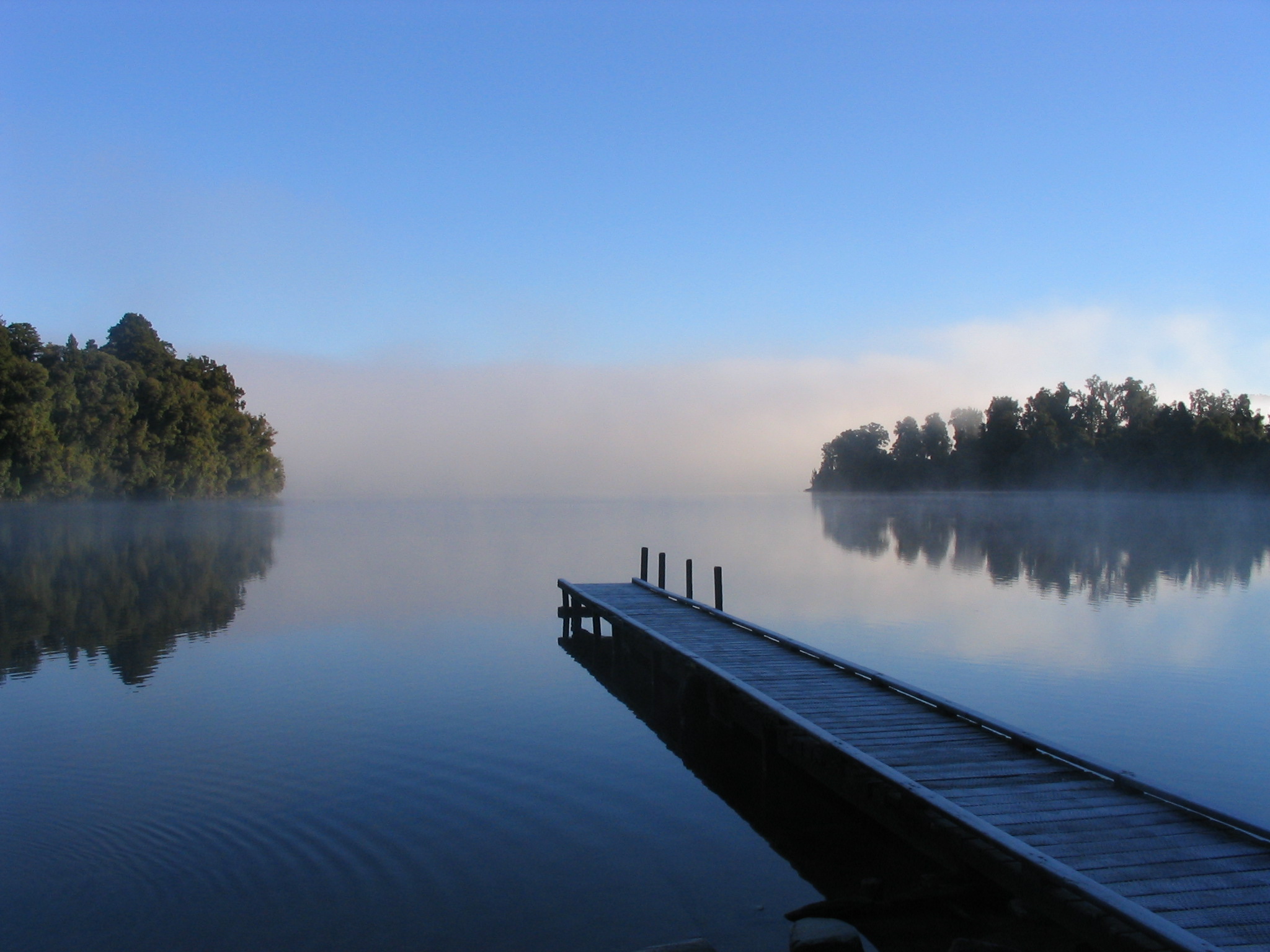
Sometimes when I’m at a loss for words it helps to come across other’s words, and just this morning I came across a treasure trove of poems at, of all places, a website of the Frye Museum, an art museum in Seattle, where they hold a weekly mindfulness meditation session on Wednesdays, and have published some poems and pieces they’ve used at these sessions. Here is one piece that seems particularly illuminating this morning. It’s not a poem, but it’s like a poem—a healing story as short as any poem. It’s not attributed to anyone. At another source I found it attributed to a Hindu master. Here’s the story: An aging master grew tired of his apprentice’s complaints. One morning, he sent him to get some salt. When the apprentice returned, the master told him to mix a handful of salt in a glass of water and then drink it. “How does it taste?” the master asked. “Bitter,” said the apprentice. The master chuckled and then asked the young man to take the same handful of salt and put it in the lake. The two walked in silence to the nearby lake and once the apprentice swirled his handful of salt in the water, the old man said, “Now drink from the lake.” As the water dripped down the young man’s chin, the master asked, “How does it taste?” “Fresh,” remarked the apprentice. “Do you taste the salt?” asked the master. “No,” said the young man. At this the master sat beside this serious young man, and explained softly, “The pain of life is pure salt; no more, no less. The amount of pain in life remains exactly the same. However, the amount of bitterness we taste depends on the container we put the pain in. So when you are in pain, the only thing you can do is to enlarge your sense of things. Stop being a glass. Become a lake.” Stop being a glass. Become a lake. I feel a small shift when I read that—I feel something get a bit larger. The salt may not change—or there may be a limit to how much I or anyone can change it. But I can change? I can become a lake? Maybe? And feeling this kind of shift when I read can be one of the things that words can do? What would it be like to become a lake? What could help make that happen? What could make the container get even a bit larger and more spacious than it is now? Say, even a pool? How might healing places shift the size of the container? How might meditation shift the size of the container? How might reading poems shift the size of the container? How might writing shift the size of the container? When have you felt the size of the container shift? How could you encourage that to happen again? The poems posted at the Frye museum can be found here. The photo is of Lake Mapourika in New Zealand and is by Richard...

read more

I must go, I will go: Poetry as Respite and Transformation

Posted by on April 23, 2012 in Blog, Healing Places, Healing Poetry

I must go, I will go: Poetry as Respite and Transformation

In the introduction to his poetry anthology, Through Corridors of Light, which I wrote about a few weeks back, John Andrew Denny writes about how poetry came to offer a respite from the cabin fever imposed by illness.  He’d been suffering with ME and Chronic Fatigue Syndrome (what is sometimes called CFIDS) when a poem, arriving on a postcard from a friend, catalyzed a shift in his experience.  The poem was John Masefield’s Sea Fever.  His wife had the genius to blow the poem up to poster size and put it up on his bedroom wall.  He writes: Until then I had spent most of my days lying on my back, gazing at the ceiling and half-listening to the radio.  Now I was just as likely to be lying on my side, focusing my mind on a few lines of the poem.  I was mesmerized by the music and the rhythm of its language, and I took comfort in saying its lines over and over like a mantra, which would run through my head at odd times of the day and night.  To my delight I found that repeated reading set my imagination alight and briefly transported me out of my prison of boredom and frustration. Saying its lines over and over like a mantra. Every few weeks he changed the poem. . . . when I followed WB Yeats’s imaginary escape from the grey London streets to his ‘Lake Isle of Innisfree’, I felt the exhilaration of freedom from my own narrow London flat, which in reality I could rarely leave. He writes: I found after several months that my feelings of being trapped began to dissolve. Something is happening here. In the first chapter – the first step – of my One Year of Writing and Healing – I write about the importance of discovering and creating and writing about healing places.  The way these can become a kind of foundation for healing.  But sometimes when one is ill it’s simply asking too much to write.  Even reading a book can be too much.  But a poem on a poster?  Perhaps that could be just the thing.  Or perhaps a single line to begin with.  Or two lines?  I love the way, in Denny’s case, how the lines of poetry – the music and rhythm of the language – gradually found its way into his mind – transforming thoughts of being trapped, gradually, gradually, into thoughts of finding respite. Something else interesting.  Both poems (two of the three he mentions in this section of his introduction) begin in similar and compelling ways. The first, John Masefield’s Sea Fever begins: I must go down to the seas again, to the lonely sea and the sky The Lake Isle of Innisfree has an opening which echoes this: I will arise and go now, and go to Innisfree I must go.  I will go.  Something here I think about what poetry can do–and about what is possible in and with the mind. ________________________________________________ See also: Another piece on Through Corridors of Light Sea Fever by John Masefield read aloud at YouTube The Lake Isle of Innisfree by WB Yeats The photo above is of Innisfree, taken by Ben Bulben, and can be found here on Flicker.  I like the way you...

read more

Tuscany

Posted by on September 2, 2011 in Blog, Healing Places

Tuscany

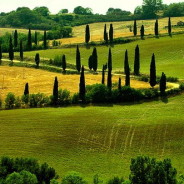
Some years ago now, while staying alone in a cabin at Wildacres, a retreat center in the Blue Ridge Mountains, I had a dream about a former patient who I will here call Nora. In the dream I’d gone to visit her. There were several of us visiting, sitting on chairs and couches. She was presenting a slide show. I understood this was a slide show of places she’d been. When I woke, I had the sense, as one does sometimes after dreams, that I was meant to be paying close attention, but on first waking I couldn’t, for the life of me, remember any of the individual pictures. Nora was a teacher, fifty-seven years old, bright, very articulate. She had a PhD in art history, was conversant with entire centuries I know next to nothing about. She also had metastatic breast cancer. She liked, she told me once, to read Samurai novels, these novels, I learned, set in seventeenth century Japan. She told me that she liked the way the setting in these novels was inextricably entwined with the action, so that you were always acutely aware as you read of the slant of light in a particular scene and what flowers were blossoming, and whether, for instance, a particular petal had fallen. Nora, herself, was acutely aware of setting. She had a strong sense of aesthetics, a love of visual beauty. For several years she’d owned an art gallery in Manhattan. She’d come to North Carolina with her husband, taught art history at the School of the Arts here for several years, and then taught Language Arts in one of the middle schools, this until she got her diagnosis of breast cancer, and then got word that it had spread into the liver and into the bone. Two years prior to the dream in which she’d showed me her slides, she’d put no small amount of energy into planning a trip to Commonweal, a retreat center in Bolinas, California considered by many to be the premier cancer retreat center in this country, a stunning place located on sixty acres in the Point Reyes National Seashore. She was very much looking forward to it. But just a little over a week before she was to leave for Commonweal, Nora fell down in the driveway of her home and broke a vertebra, this landing her in the hospital and effectively canceling her trip. The next time I saw her she told me that she knew now that that had been her last window—her last chance to take a trip of this magnitude. Her belly by this point was swollen from the tumors that herd arisen in her liver. Her bones ached. She was, she told me, very very tired. But she also told me this. That not long after she broke her vertebra, and came to realize she was not going to make it to Commonweal after all, she had a series of dreams. These were dreams, she said, about places she’d traveled. Tuscany figured largely in one of them. When this series of dreams ended, she told me she understood now that all of the places were deep inside her, the memories, that she carried these places with her now, and it would no longer be necessary for...

read more

The Peace of Wild Things by Wendell Berry

Posted by on August 16, 2011 in Blog, Healing Places, Healing Poetry

The Peace of Wild Things by Wendell Berry

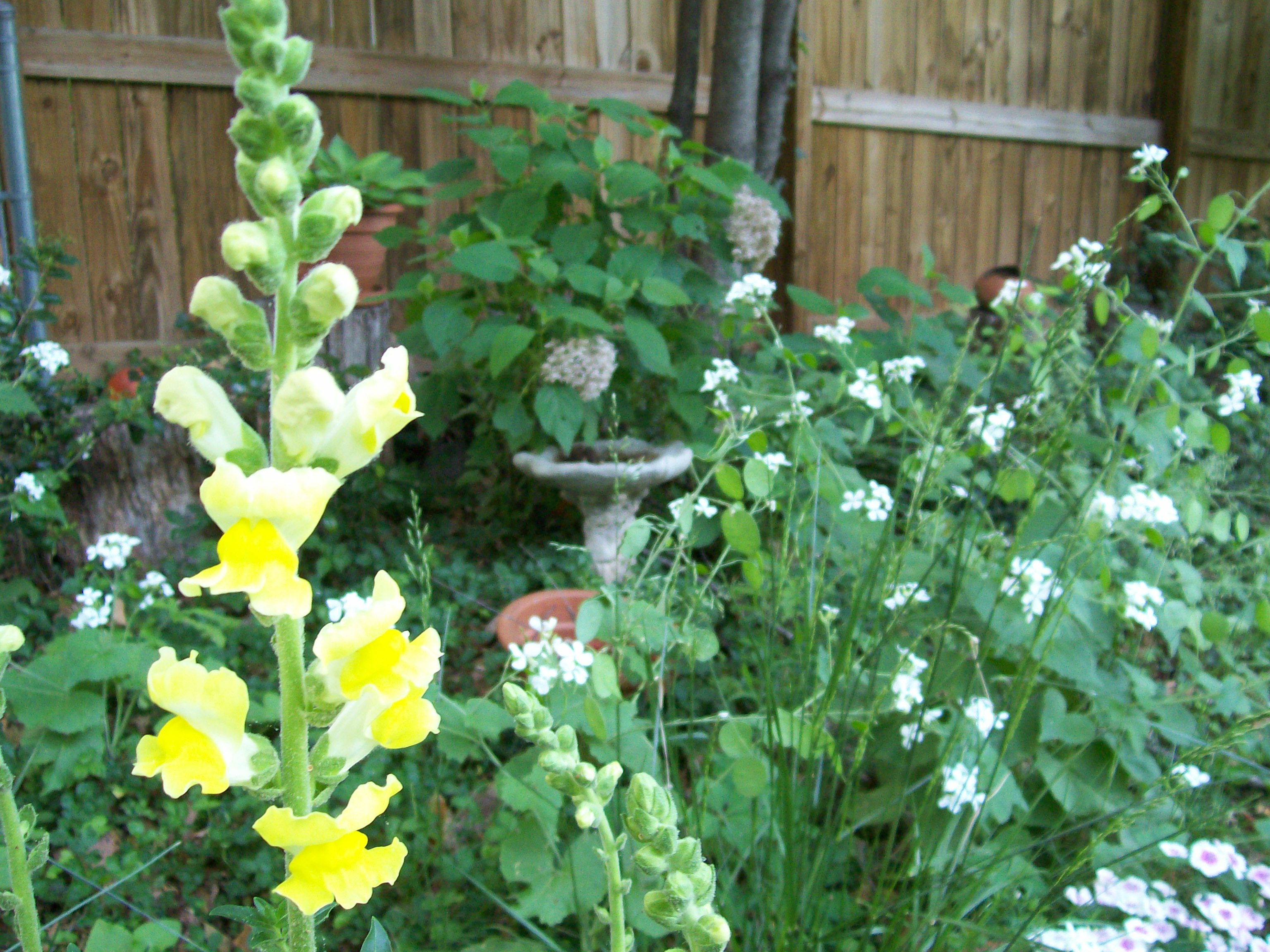
This is a poem for the middle of the night.  Here are the first six lines: When despair for the world grows in me and I wake in the night at the least sound in fear of what my life and my children’s lives may be, I go and lie down where the wood drake rests in his beauty on the water, and the great heron feeds. I come into the peace of wild things His words make me want to respond in kind.  To echo and borrow his rhythms: When despair for my life and the life of those whom I love grows in me and when I wake in the night and the fear is there like an old visitor, I go out to the kitchen and I make, again, a mug of hot cocoa, and I remember, if only for a moment, the breezeway in my grandmother’s house, the coolness against my bare feet, the way it led out to the patio and the small table there, the fence around the yard, and the flowers against the fence, hollyhocks and four o’clocks and lilac.  I feel how that place is still present because I can remember it and with that I come into the peace of my grandmother’s garden. See also: The Peace of Wild Things One Year of Writing and Healing, Chapter 1, Draft: Creating a Healing...

read more