Navigation Menu+

Healing Poetry

Whoever you are, no matter how lonely,

the world offers itself to your imagination,

calls to you like the wild geese, harsh and exciting

over and over announcing

your place in the family of things.

——from The Wild Geese by Mary Oliver

There are a large number of poems that could be offered as potentially healing. I’m offering here a handful that I’ve come across, and written about briefly, because they seem to me to resonate especially well with the process of healing, and because any one of them seems like it could be a springboard—a trampoline?—to one’s own writing.

I. Poems that conjure a healing place

Last Night As I Lay Sleeping by Antonio Machado

The Peace of Wild Things by Wendell Berry

The Lake Isle of Innisfree by WB Yeats

Island of the Raped Women by Frances Driscoll

Keeping Quiet by Pablo Neruda

What I Want by Alicia Ostriker

II. Poems about a quest

The Journey by Mary Oliver

Diving into the Wreck by Adrienne Rich

III. Poems that might offer company during a difficult time

The Guest House by Rumi

A Ritual to Read to Each Other by William Stafford

Satellite Call by Sara Bareilles

The Armful by Robert Frost

The Spell by Marie Howe

Talking to Grief by Denise Levertov

Sweetness by Stephen Dunn

My Dead Friends by Marie Howe  

III. Poems for looking at the world in new ways

The Wild Geese by Mary Oliver

Thirteen Ways of Looking at a Blackbird by Wallace Stevens

Eighteen Ways of Looking at Cancer by a group of women in a writing workshop

Report from a Far Place by William Stafford

who knows if the moon’s a by e.e. cummings

The Snowman by Wallace Stevens

Notes in Bathrobe Pockets by Raymond Carver

A New Path to the Waterfall, a collection by Raymond Carver and Tess Gallagher

The Summer Day by Mary Oliver

IV. Poems about the process of reading

Introduction to Poetry by Billy Collins  

V. Poems for considering purpose

Every Craftsman by Rumi.


The Buddha’s Last Instruction by Mary Oliver

Posted by on May 15, 2012 in Blog, Healing Poetry, Month 13

The Buddha’s Last Instruction by Mary Oliver

During a bittersweet week of graduations, watching a whole flock of students move on, my heart full with their moving, I keep coming back to this poem.  Now, only this morning, does it occur to me that the poem describes a kind of graduation speech–a person, in this case Siddhartha Gautama, trying to condense what he learned into a few words. The poem begins this way: “Make of yourself a light,” said the Buddha, before he died. 5 words.  Make of yourself a light. The speaker of Mary Oliver’s poem connects this instruction to the rising of the sun itself. I think of this every morning as the east begins to tear off its many clouds of darkness, to send up the first signal—a white fan streaked with pink and violet, even green. I find myself, this morning, the sun already risen, connecting the Buddha’s instructions to tangible light outside my windows, light glowing in the green leaves, and, beyond these trees, I feel the instructions connected to what I see in my mind–a gaggle of students in graduation robes–the light I have seen shine from and among them these last three years that I’ve been with them.  The confidence I feel that they will carry this light forward.  The sense I have–something a little more than hope–that this extension and expansion of light does not diminish me–their leaving–but somehow extends and expands all of us.  A sense I used to have years back when patients graduated from seeing me.  A sense I’ve felt at different moments as my own children grow up and away. He might have said anything, Mary Oliver writes. What he said were those 5 words: Make of yourself a light. The speaker of the poem watches and feels the sun blaze over the hills and it’s as if she feels the words themselves in that light I feel myself turning into something of inexplicable value. As if following this instruction could matter?  As if following it could make a difference? He could have said anything. he raised his head. He looked into the faces of that frightened crowd. The poem ends on that last line, the pause before the last instructions.  And I love that Oliver considers that the crowd was frightened.  Transitions always seem to hold that kernel of fear–change is occurring.  Nothing’s going to be exactly the way it was before.  In this case, a person they loved and looked toward was leaving.  What would he tell them?  What could he tell them?  They must have held their breaths, waiting. And then, after he finally spoke, the words must have echoed inside their heads–and hearts–for the rest of their lives.  Oliver, I suspect, intends the words to echo for us as well, at least for a time.  She’s constructed her poem, it seems, with that intent.  She doesn’t repeat the instructions at the end of the poem.  It’s the dropped beat that we inevitably must fill. He looked into the faces of that frightened crowd. A pause.  And then he spoke. _______________________________________ See also: Full text of Mary Oliver’s poem, The Buddha’s Last Instruction A piece on Shine by Joni Mitchell A piece on November Angels by Jane Hirshfield...

read more
I must go, I will go: Poetry as Respite and Transformation

Posted by on April 23, 2012 in Blog, Healing Places, Healing Poetry

I must go, I will go: Poetry as Respite and Transformation

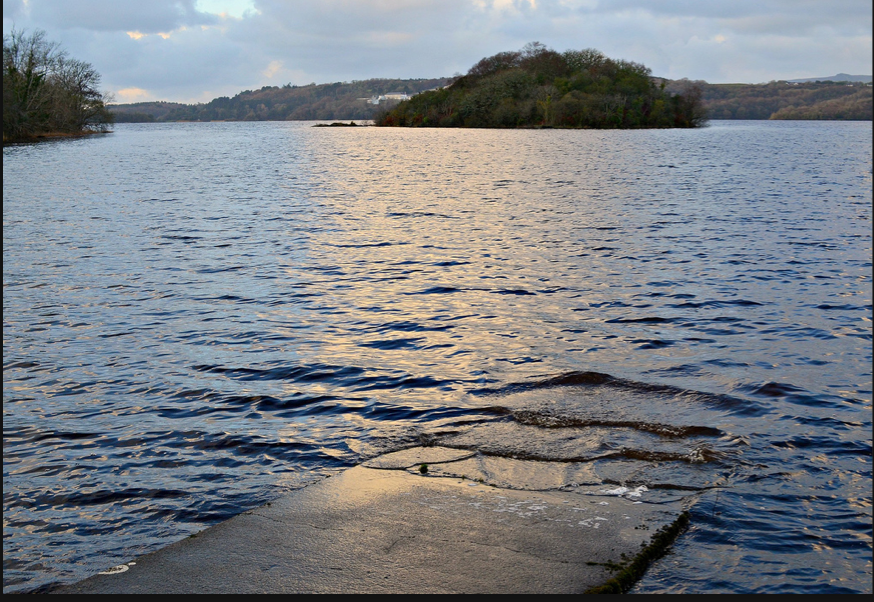
In the introduction to his poetry anthology, Through Corridors of Light, which I wrote about a few weeks back, John Andrew Denny writes about how poetry came to offer a respite from the cabin fever imposed by illness.  He’d been suffering with ME and Chronic Fatigue Syndrome (what is sometimes called CFIDS) when a poem, arriving on a postcard from a friend, catalyzed a shift in his experience.  The poem was John Masefield’s Sea Fever.  His wife had the genius to blow the poem up to poster size and put it up on his bedroom wall.  He writes: Until then I had spent most of my days lying on my back, gazing at the ceiling and half-listening to the radio.  Now I was just as likely to be lying on my side, focusing my mind on a few lines of the poem.  I was mesmerized by the music and the rhythm of its language, and I took comfort in saying its lines over and over like a mantra, which would run through my head at odd times of the day and night.  To my delight I found that repeated reading set my imagination alight and briefly transported me out of my prison of boredom and frustration. Saying its lines over and over like a mantra. Every few weeks he changed the poem. . . . when I followed WB Yeats’s imaginary escape from the grey London streets to his ‘Lake Isle of Innisfree’, I felt the exhilaration of freedom from my own narrow London flat, which in reality I could rarely leave. He writes: I found after several months that my feelings of being trapped began to dissolve. Something is happening here. In the first chapter – the first step – of my One Year of Writing and Healing – I write about the importance of discovering and creating and writing about healing places.  The way these can become a kind of foundation for healing.  But sometimes when one is ill it’s simply asking too much to write.  Even reading a book can be too much.  But a poem on a poster?  Perhaps that could be just the thing.  Or perhaps a single line to begin with.  Or two lines?  I love the way, in Denny’s case, how the lines of poetry – the music and rhythm of the language – gradually found its way into his mind – transforming thoughts of being trapped, gradually, gradually, into thoughts of finding respite. Something else interesting.  Both poems (two of the three he mentions in this section of his introduction) begin in similar and compelling ways. The first, John Masefield’s Sea Fever begins: I must go down to the seas again, to the lonely sea and the sky The Lake Isle of Innisfree has an opening which echoes this: I will arise and go now, and go to Innisfree I must go.  I will go.  Something here I think about what poetry can do–and about what is possible in and with the mind. ________________________________________________ See also: Another piece on Through Corridors of Light Sea Fever by John Masefield read aloud at YouTube The Lake Isle of Innisfree by WB Yeats The photo above is of Innisfree, taken by Ben Bulben, and can be found here on Flicker.  I like the way you...

read more

Writing and Healing Prompt: Opening the Door of Mercy

Posted by on April 9, 2012 in Blog, Healing Poetry, Writing and Healing Prompts

Writing and Healing Prompt: Opening the Door of Mercy

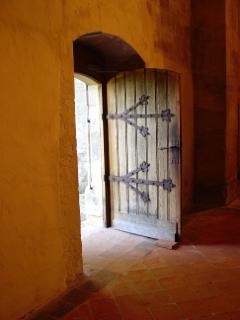
  Last week I shared and analyzed an essay with my sophomores: “Opening the Door of Mercy,” an essay by Karen Round published as part of the “This I Believe” series on NPR.  I couldn’t resist discovering the vivid language in her essay and rearranging it into a found poem, something I’ve discovered is helping me read more closely—and attend to language and form. So. . . here are her words rearranged on the page, a kind of distillation of the essay. The sky darkening. The silhouette of a woman sagging on our threshold. Our location forces difficult choices.   Wisdom advises to act a Good Samaritan is to be naïve, risk terrible consequences.   But when someone approaches, I have to decide: Is my own safety always the most important consideration? Must I fear all whom I don’t know? Do I help or not?   I believe repeatedly rejecting others who need help endangers me.   So here where we live on that afternoon one summer when the woman was sinking like the sun on my front porch, I made my choice. I opened the door.   We discussed in class how this essay could become a kind of mentor text or catalyst—finding that moment or series of moments in one’s life where a choice had to be made—and then using that choice to begin an essay—and, in so doing, to find ways to bring other readers in, to recognize and write our way towards the notion that we are all often facing similar kinds of choices. Like this choice: when a stranger arrives at our threshold, do we open the door or not? (And how do we balance wisdom and compassion when we’re making such choices?) This essay also puts me in mind (yet once again) of Rumi’s poem about the guest house and the way that outer guests and inner guests can mirror each other and correspond.  (I’m beginning to suspect this poem by Rumi can connect to many, many things.) This being human is a guest house. Every morning a new arrival.   A joy, a depression, a meanness, some momentary awareness comes as an unexpected visitor.   Welcome and entertain them all! Even if they’re a crowd of sorrows, who violently sweep your house empty of its furniture, still, treat each guest honorably. This could lead to yet another writing idea: Who or what is waiting at the threshold?  Is now the right time—or not—to open the door?  What might happen if one did? _________________________________________________ See also: Karin Round’s essay at NPR November Angels Rumi’s full poem, The Guest House, at Panhala...

read more

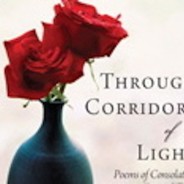
Through Corridors of Light: Poems of Consolation during Illness

Posted by on March 27, 2012 in Blog, Healing Books, Healing Corridor, Healing Poetry, Resources

Through Corridors of Light: Poems of Consolation during Illness

I have just become aware of a new poetry anthology published in the UK for people who are dealing with illness.  The anthology is edited by John Andrew Denny, who writes, at his website: I was ill for more than twenty years with ME/Chronic Fatigue Syndrome. For most of that time I was bedbound, in pain and at times deeply depressed, and I was  helped to an extraordinary degree by reading and meditating on poetry that addressed my own thoughts and feelings about my illness. In an email conversation, he also writes about a connection between reading poetry and writing, something I find of particular interest: The initial reason I compiled Through Corridors of Light was that when I was first ill (in 1991) I was so weak that anything longer than a short(ish) poem was beyond my concentration. Now that I am quite a lot stronger, I still find writing very slow, and creative writing is unsatisfying for me unless I can find some relevant model to stimulate my mind  – so both of these impulses were what inspired my anthology. What makes it so therapeutic is that in giving voice to one’s hopes, fears, worries, or desires, the poems not only trigger other thoughts and feelings but also show how poems on such themes can be successfully constructed. What makes it so therapeutic is that in giving voice to one’s hopes, fears, worries, or desires, the poems not only trigger other thoughts and feelings but also show how poems on such themes can be successfully constructed. I love this idea–the connection between reading a poem and beginning to write.  I think this speaks to what is possible. We read and then we write, and in doing so a healing conversation extends and continues and spreads like a network of healing corridors. I’m waiting for my copy to arrive in the mail.  Meanwhile, I can direct you to his beautiful website which contains a detailed table of contents, a visitor page, and ordering information.  He’s donating all profits from his book to ME Research UK, a charity in the UK doing research into Myalgic Encephalomyelitis/Chronic Fatigue Syndrome. __________________________________________ See: Through Corridors of Light I Must Go, I Will Go, another piece on John Andrew Denny’s...

read more

Indra’s Net

Posted by on March 14, 2012 in Blog, Healing Poetry

Indra’s Net

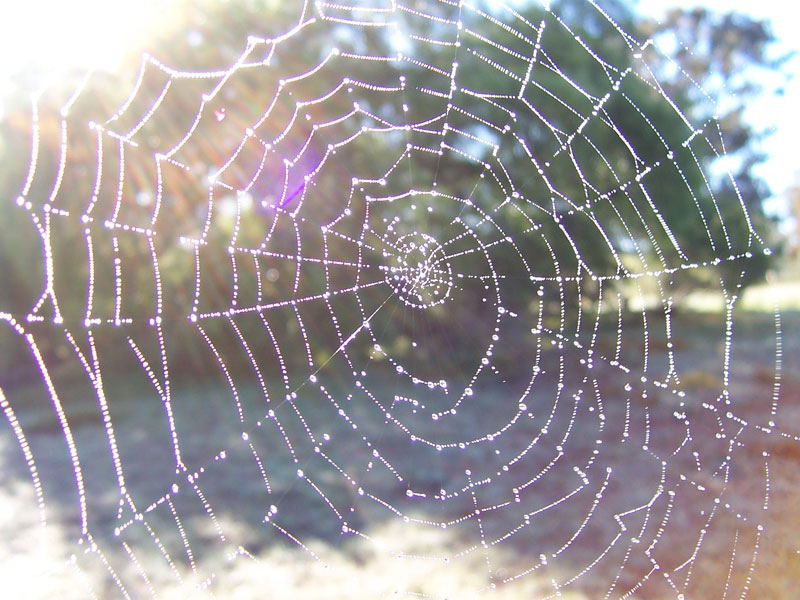
  From The Open Road by Pico Iyer Chapter Four, The Philosopher   When the Dalai Lama speaks of interdependence all he is really saying is that we are all a part of a single body.   Perhaps it’s not surprising he is famous for his laughter, the sudden eruption of helpless giggles traveling to the point where everything is connected, our fascination with division hilarious.   Quarreling over money is like taking a ten-dollar-bill out of your right-hand pocket and then, after a great deal of fanfare and contention, putting it in your left. ____________________________ See also: The Open Road by Pico Iyer, Part One Indra’s net at Wikipedia, the source of the above photo Also the source of this quote by Alan Watts: Imagine a multidimensional spider’s web in the early morning covered with dew drops. And every dew drop contains the reflection of all the other dew drops. And, in each reflected dew drop, the reflections of all the other dew drops in that reflection. And so ad infinitum. That is the Buddhist conception of the universe in an...

read more

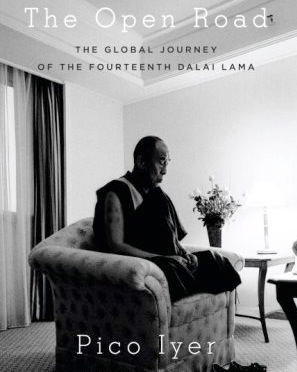
The Open Road by Pico Iyer

Posted by on March 7, 2012 in Blog, Healing Books, Healing Poetry

The Open Road by Pico Iyer

  I am rereading The Open Road: The Global Journey of the Fourteenth Dalai Lama.  Pico Iyer, a journalist and novelist, has known the Dalai Lama for decades, first meeting him with his father when he was an adolescent.  In this impressionistic biography he peels back layers of the Dalai Lama to present him in nine different facets.  The first chapter—the first facet—is The Conundrum. In it I found this, a kind of poem: We are not talking about God We are not talking about Nirvana We are only talking about how to become a more compassionate human being.   At times he pulls out a piece of tissue and polishes his glasses A metaphor   He has taken off his watch with its sturdy stainless-steel band. Know exactly how much time you have he might be saying and use that time for some good. ______________________________ More about The Open Road: A televised conversation with Pico Iyer at Foratv A book review at the New York Times The book at...

read more