Navigation Menu+

Healing Places

Last Night As I Lay Sleeping

Posted by on July 26, 2011 in Blog, Healing Places, Healing Poetry

Last Night As I Lay Sleeping

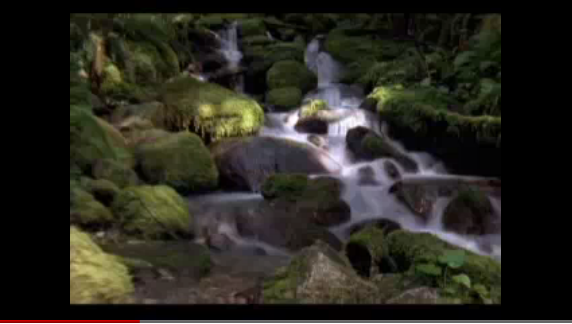
Twice recently I have come across this haunting and joyous poem by the Spanish poet, Antonio Machado. In the translation by Robert Bly it begins: Last night as I was sleeping, I dreamt – a marvelous error! – that a spring was breaking out in my heart. I said: Along which secret aqueduct, Oh water, are you coming to me . . . Looking around a little, I’ve seen some differences in the translation–especially in the second line. The original Spanish word translated as error is ilusion and can also be translated as vision.  I dreamt – a marvelous vision! – a blessed vision! – that a spring was breaking out in my heart. Either way – so many possibilities here. I love the idea of the water inside. It reminds me of a retreat center I visited once. The place was a house with a central courtyard and in the courtyard was a garden with a pond. I’m not a good meditator. But I tried a couple of meditation sessions there and when I did, and sometimes in the weeks and months after, I found myself imagining having that kind of courtyard inside my own self, with a pond. In Machado’s poem I like the idea that the water is moving. A spring. A secret aqueduct. Here is a lovely video rendition of the poem done by Four Seasons Productions, part of their Moving Poetry series which you can learn more about here. (If you have trouble playing the video, let it buffer first. Or, you can watch directly at YouTube here.) [The photo at the top of this post is grabbed from the...

read more

A Clean, Well-Lighted Place

Posted by on August 29, 2006 in Healing Places

Ernest Hemingway was a genius at creating healing places with words. Here are two. The first is set in Michigan. Hemingway’s family had owned a cottage on a lake in Michigan and he spent summers there as a boy. Consider this place which he recreates in a story called, “Summer People,” one of his Michigan stories. Halfway down the gravel road from Hortons Bay, the town, to the lake, there was a spring. The water came up in a tile sunk beside the road, lipping over the cracked edge of the tile and flowing away through the close growing mint into the swamp. In the dark Nick put his arm down into the spring but could not hold it there because of the cold. He felt the featherings of the sand spouting up from the spring cones at the bottom against his fingers. Nick thought, I wish I could put all of myself in there. I bet that would fix me. It’s the details again that bring the place alive. The water lipping over the cracked edge of the tile. The close growing mint. The featherings of sand. A second healing place that Hemingway created is a more famous one—a clean well-lighted place in a story by the same name: In the story an old man sits on the terrace of a café at closing time. It’s late, but the old man, the last customer of the night, is reluctant to leave. A waiter wipes off the old man’s table with a towel and shoos him out. This waiter is eager to get home to his wife, his warm bed. But a second waiter, older than the first, is sympathetic to the old man’s need to linger. First, he tries to explain this to the younger waiter, and then, when the younger waiter loses interest, he tries to explain it to himself, or to whoever will listen—what it is about this particular place that is important: “It is the light of course but it is necessary that the place be clean and pleasant. You do not want music. Certainly you do not want music.” This waiter is very clear about what is necessary for him. This is something writing can do—allow us to become very clear about what is necessary for us. What kind of place? What kind of light? Music?...

read more

Terabithia and Tangalooponda: Healing Places in Books

Posted by on August 24, 2006 in Healing Places

I never had a fort when I was a kid. Maybe that’s why the fort in Bridge to Terabithia holds a particular pull for me. Or maybe it’s the details that Katherine Paterson, the author of the novel, lends it. Jess and Leslie are eleven when they find the perfect place to build their fort—a clearing among dogwood at the edge of the woods. They build the fort out of scrap board. They lay in provisions—clean water in old Pepsi bottles, a coffee can filled with crackers and dried fruit. Then at some point the fort and the land around it become a kingdom—and they give it a name—Terabithia. Such a lovely name. There’s a passage in the novel where Katherine Paterson describes what it feels like for Jess, the boy, to cross over into Terabithia: Just walking down the hill toward the woods made something warm and liquid steal through his body. The closer he came to the dry creek bed and the crab apple tree rope the more he could feel the beating of his heart. He grabbed the end of the rope and swung out toward the other bank with a kind of wild exhilaration and landed gently on his feet, taller and stronger and wiser in that mysterious land. That’s what interests me—right there—the change possible in the body upon entering certain places. And there’s another place, in another novel—A Map of the World, by Jane Hamilton. The central character, Alice, is looking for her bathing suit one summer morning when she comes upon a series of maps she had drawn as a child. Her mother died when she was a young girl and the maps carry her back to a place, Tangalooponda, that she conjured in the wake of that loss: I took out the sheaf of papers and knelt down, spread them on the floor, ran my fingers over the lime-green forests, the meandering dark blue rivers, the pointy lavender mountain ranges. I had designed a whole world when I was a child, in secret. I had made a series of maps, one topographical, another of imports and exports, another highlighting mineral deposits, animal and plant species, another with descriptions of governments, transportation networks, and culture centers. My maps had taken over my life for months at a time; it was where I lived, the world called Tangalooponda, up in my room, my tray of colored pencils at my side, inventing jungle animals, the fish of the sea, diplomats and monarchs. Although there were theoretical people in my world, legions of them, all races and creeds, when I imagined myself in Tangalooponda I was always alone, composed and serene as an angel in the midst of great natural beauty. When I imagined myself in Tangalooponda I was always alone, composed and serene as an angel in the midst of great natural beauty. Is it possible then? Can being among natural beauty effect a change in the mind? Can drawing a map of a place with natural beauty effect this kind of change? Can writing about natural beauty do this?   Bridge to Terabithia can be found here. A Map of the World can be found...

read more
The Shelter of Poetry

Posted by on August 22, 2006 in Healing Places, Healing Poetry

Several years ago now, in the May/June 2001 issue of Poets and Writers magazine, a series of articles appeared on the topic, “Writing as a Healing Art.” Among these, perhaps the most compelling was a feature by Felicia Mitchell on Frances Driscoll, the author of a volume of poetry, The Rape Poems. Driscoll was working as a poet, beginning to publish her work, when in 1987 she was raped. She stopped writing after the rape. She believed, she said, that she would never write again. And then, gradually, poems began to come. One such poem is entitled, “Island of the Raped Women.” It contains these lines: We all sleep through the night. We wake eager from dreams filled with blue things and designs for hats. At breakfast, we make a song, chanting our litany of so much collected blue. We do not talk of going back to the world. We talk of something else. . . (Read the whole poem here.) In the article in Poets and Writers, Driscoll speaks about the responses she gets to this particular poem: Little girls barely out of their teens ask. Sometimes college women ask. The question is always whispered. The question is desperate and urgent. The question always breaks my heart. The question is, ‘Where is the island? Where is the island? It’s such a moving question, such a poignant question. It also points to what is possible: words powerful enough to create an island. Words powerful enough to create shelter. For the reader? For the writer? For...

read more

Emily's Healing Place: A Place to Heal from Anorexia

Posted by on August 18, 2006 in Healing Places

[Please note that, as with any patients I write about here, unless otherwise stated, names and certain identifying details have been changed to protect privacy.] Writing about a healing place can offer the kind of moment that changes things. In fact, simply imagining a healing place can sometimes change things. I’ve seen this happen. One particular place that comes to mind is a place that a woman named Emily imagined. Emily was twenty-seven years old, and weighed, when she first came to see me as a patient, fifty-two pounds. She’d tried and failed at several different treatment programs for anorexia and was under the care of an internist who was monitoring her physical condition. She was referred to my practice of mind-body medicine by a family friend who suspected that her condition might also benefit from being considered at the interface of mind and body. Emily concurred. And so we began. After a few weeks Emily began keeping a journal. It was, I believe, a few weeks after this that I invited her to imagine a healing place. One of her fears about beginning to eat again was the risk that any food she took in would make her stomach protrude—something she’d come to believe was ugly. She told me she’d like to imagine a place where it would be okay to have a stomach—a place where she wouldn’t feel ashamed of having a stomach. When she began to imagine such a place—a place where it might be safe to gain weight—she began to imagine herself at a barn among horses, this a place she’d loved as a young girl. She imagined brushing the horses, stroking them, placing her cheek against their flanks. She imagined mucking out the stalls. She wrote about this place in her journal. As with most good writing, it was the details that brought the place alive. The stroke of the brush against the horse’s hide. The warmth against her cheek. The horse’s breath. The sharp sweet smell of the stalls. The place became real through the details. With practice, she became able to summon the barn in her imagination when she felt anxious. She imagined stroking the horses, and brushing them. She imagined—and then experienced—the feeling in her body of her body being accepted. “The horses,” she told me, “they wouldn’t judge me if my stomach was pooching out. They wouldn’t care if I had a stomach or...

read more

Writing and Healing Idea #1: Designing a Healing Retreat

Posted by on August 13, 2006 in Healing Places, Writing Ideas

Writing and Healing Idea #1: Designing a Healing Retreat

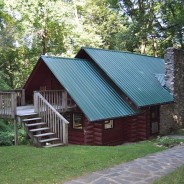
Imagine for a moment that you go to your mailbox.  You find there an envelope—a small white square.  You open the envelope to find an invitation–to a healing retreat. A sheet of paper accompanying the card offers details: For six weeks, it has become possible for all of your ordinary routines and responsibilities to be suspended.  Work schedules have been rearranged.  Children will be safe and well-cared for.  Any appointments (or medical treatments) have been rescheduled such that they will not interfere.  In fact, any and all obstacles standing in the way of this retreat have been removed.  In addition, your house or apartment will be cared for in your absence.  Plants will be watered.  Floors swept.  The refrigerator cleaned out.  Your task, now, is simply to design—in writing—or perhaps with drawings—this retreat. In order to design this retreat you may find yourself needing to suspend disbelief.  (Someone is really going to clean out my refrigerator for me?)  Go ahead.  Suspend.  Once you’ve done so you may find the following questions useful in designing your retreat: Where would you like the retreat to take place? What weather do you like? What kind of light? What resources would you like available close by? Walking trails? A piano? A swimming pool? A lake? What kind of accommodations do you prefer? Will the place have a porch? A window? Would you like to be alone in this place? Or do you prefer company? And what kind of company? Do you prefer quiet? Or noise? What sounds do you imagine in this place? What about smells? What does the sky look like in this place? How does the air feel? Where will you sit? Where will you sleep? What will you eat? How will the refrigerator be stocked? Who will prepare your food? What would you like to do on the first day? On a typical day? Is there anything else that’s important to the design of this retreat? What else?   Please note that the seed for this invitation to design a healing retreat comes from a short chapter in Deena Metzger’s book, Writing for Your Life.  The chapter, entitled, “Setting Up a Retreat,” can be found on p. 81. Photo is of the original Wildacres Retreat Cabin in the Blue Ridge Mountains of North Carolina where I had the good fortune to spend a week of writing retreat on two different occasions.  You can learn more about Wildacres Retreats here. They’ve added two additional cabins since I stayed...

read more